
I, my colleagues, and students at Tehran University of Medical Sciences (TUMS) and Iran University of Medical Sciences (IUMS), have contributed two chapters to the new book “Bioimaging Modalities in Bioengineering” published by Springer about photoacoustic imaging:
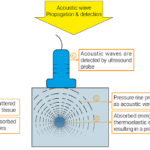
The first chapter is about Fundamentals of Photoacoustic Imaging. In this chapter, we explored the fundamental principles of PAI, focusing on its signal generation and detection mechanisms, the roles of endogenous and exogenous contrast agents, and various imaging methodologies, including PA spectroscopy, microscopy, remote sensing, and tomography. Additionally, we introduced some advanced image reconstruction techniques critical for enhancing the quality of PA images, emphasizing the need for practical algorithms due to the complexities of acoustic signal propagation within heterogeneous biological tissues.
To read the full chapter, the following link can be used:
Fundamentals of Photoacoustic Imaging

Our second chapter is about Applications of Photoacoustic Imaging in Preclinical Research. In this chapter, we explored the applications of PAI in preclinical research, which range from tumor imaging, wound healing monitoring, to drug delivery assessment. By merging functional and molecular imaging capabilities, PAI demonstrates its versatility in preclinical research and its potential for clinical application.
To read the full chapter, the following link can be used:
Applications of Photoacoustic Imaging in Preclinical Research

These chapters reflect our passion for advancing photoacoustic imaging and exploring its potential to transform biomedical research.
If you have any comments about these chapters, please feel free to reach me via my e-mail or contact page, or my LinkedIn profile.
I hope these chapters help young researchers pave their first steps in the field of photoacoustic imaging for making great advancements in this interesting field.

Leave a Reply