
OpenCV plays a significant role in medical image processing by providing powerful tools for analyzing various medical imaging modalities such as X-rays, CT scans, and MRI images. It is extensively used to enhance diagnostic accuracy, support treatment planning, and improve patient care through advanced image processing techniques. The key applications of OpenCV in medical image processing are as follows;
Medical Image Enhancement and Preprocessing
OpenCV offers a wide range of image enhancement techniques, such as noise reduction, contrast adjustment, and filtering, to improve the quality of medical images. These preprocessing steps help in clarifying subtle features in images, making it easier for clinicians and algorithms to detect abnormalities accurately. Techniques like median blur, adaptive thresholding, and histogram equalization are commonly used for preparing images before analysis.
Image Segmentation
Medical image segmentation is one of the critical uses of OpenCV, enabling the partitioning of medical scans into distinct regions or structures, such as organs or pathological areas. This segmentation assists surgeons and radiologists by providing clear delineation of anatomical features for diagnosis and surgical planning. OpenCV supports segmentation methods, including watershed and clustering, which can be combined with deep learning models to automate and accelerate the process.
Feature Extraction and Analysis
Feature extraction techniques in OpenCV facilitate the identification and representation of critical image elements such as edges, corners, textures, and shapes. These extracted features are foundational for further tasks like classification and detection of medical conditions. OpenCV includes algorithms such as Scale-Invariant Feature Transform (SIFT), Oriented FAST and Rotated BRIEF (ORB), and Histogram of Oriented Gradients (HOG) to detect and describe meaningful features in medical images efficiently.
Medical Image Registration
OpenCV is employed to align multiple images of the same patient taken at different times, angles, or with different modalities. Image registration enhances the ability to compare scans accurately by spatially aligning them, which is crucial for tracking disease progression or planning treatments. It uses transformation models and feature matching algorithms like ORB and ECC-based alignment to automate this process.
Real-Time Monitoring and Telemedicine
Beyond static image analysis, OpenCV contributes to real-time patient monitoring by processing live video streams or images to detect physiological signals or anomalies non-invasively. This capability supports telemedicine applications by enabling remote diagnostics and continuous health monitoring, improving accessibility and response times in healthcare delivery.
Integration with AI and Deep Learning
OpenCV works in synergy with deep learning frameworks to build sophisticated diagnostic models that can analyze complex patterns within medical images. It facilitates the preprocessing and augmentation of medical images used for training AI models, boosting the models’ accuracy and robustness. Examples include fine-tuning transformer-based models for segmentation tasks and using OpenCV for preprocessing inputs to neural networks.
3D Visualization and Surgical Planning
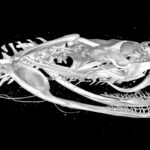
Advanced OpenCV tools enable 3D visualization of medical volume images, allowing practitioners to view and interact with multi-dimensional data. This capability is especially useful in pre-surgical planning and simulation, where precise anatomical modeling can lead to better surgical outcomes and reduced operational risks.
Benefits and Impact
OpenCV’s extensive library of optimized algorithms and cross-platform support make it a versatile and efficient choice for medical image processing. It improves diagnostic workflows by increasing accuracy, speeding up image analysis, and providing tools for automating repetitive tasks. The integration of OpenCV with AI ecosystems further elevates its potential, delivering enhanced clinical decision support and patient care.
In summary, OpenCV substantially contributes to medical image processing through image enhancement, segmentation, feature extraction, registration, and real-time analysis. Its applications empower healthcare professionals with precise, efficient, and automated tools essential for modern medical diagnostics and treatment planning.
More posts about image processing and OpenCV can be found here: https://mrfouladi.com/category/image-processing/
Also, there’s a great resource at https://learnopencv.com/category/medical-imaging/


Leave a Reply